
Couplings: Essential Components for Efficient Power Transmission
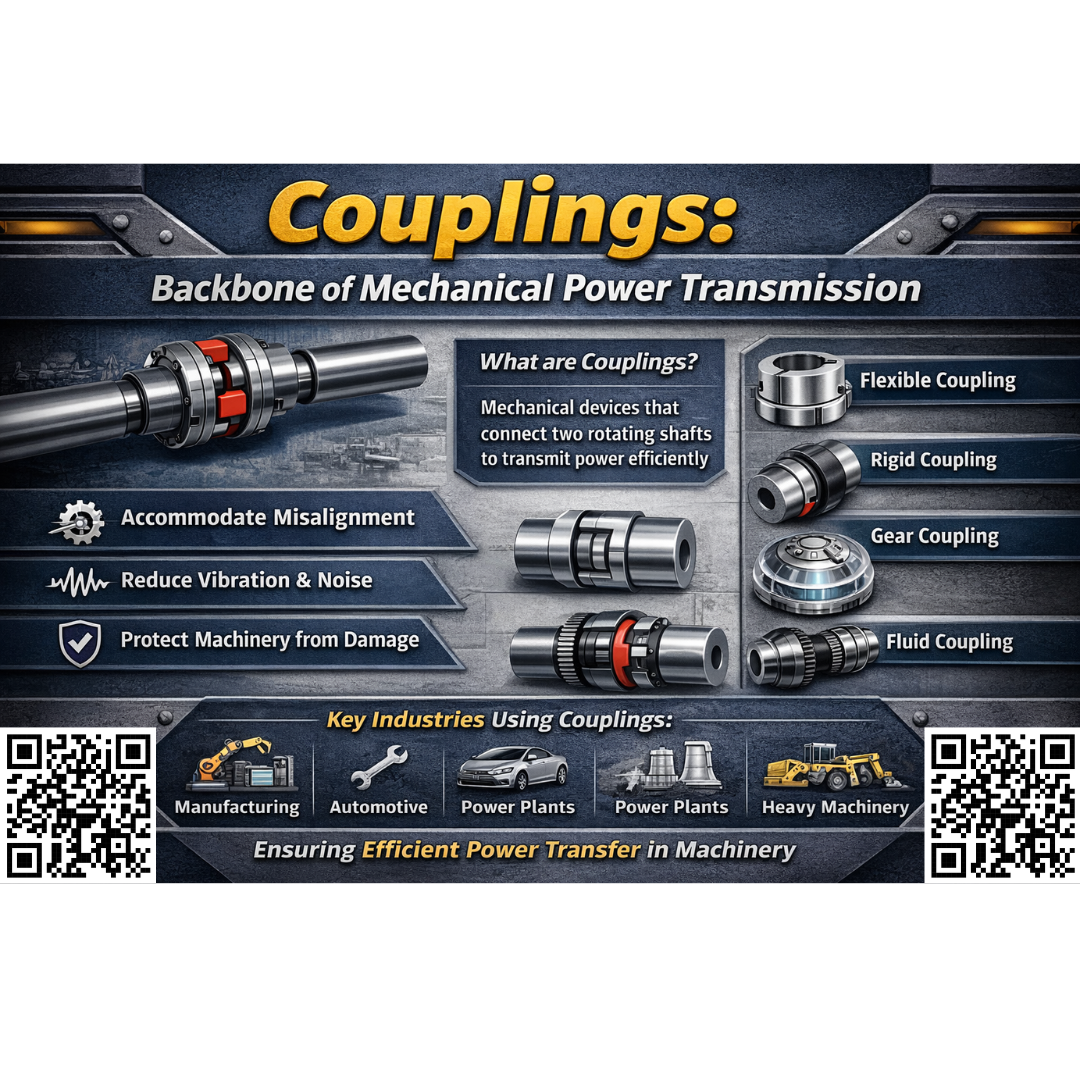
Couplings are mechanical devices used to connect two rotating shafts for the purpose of transmitting power from one shaft to another. They play a crucial role in various industrial machines by ensuring smooth and efficient torque transfer while also protecting equipment from damage caused by misalignment, shock loads, and vibration. Due to their versatility and importance, couplings are widely used in industries such as manufacturing, power generation, automotive, and processing plants.
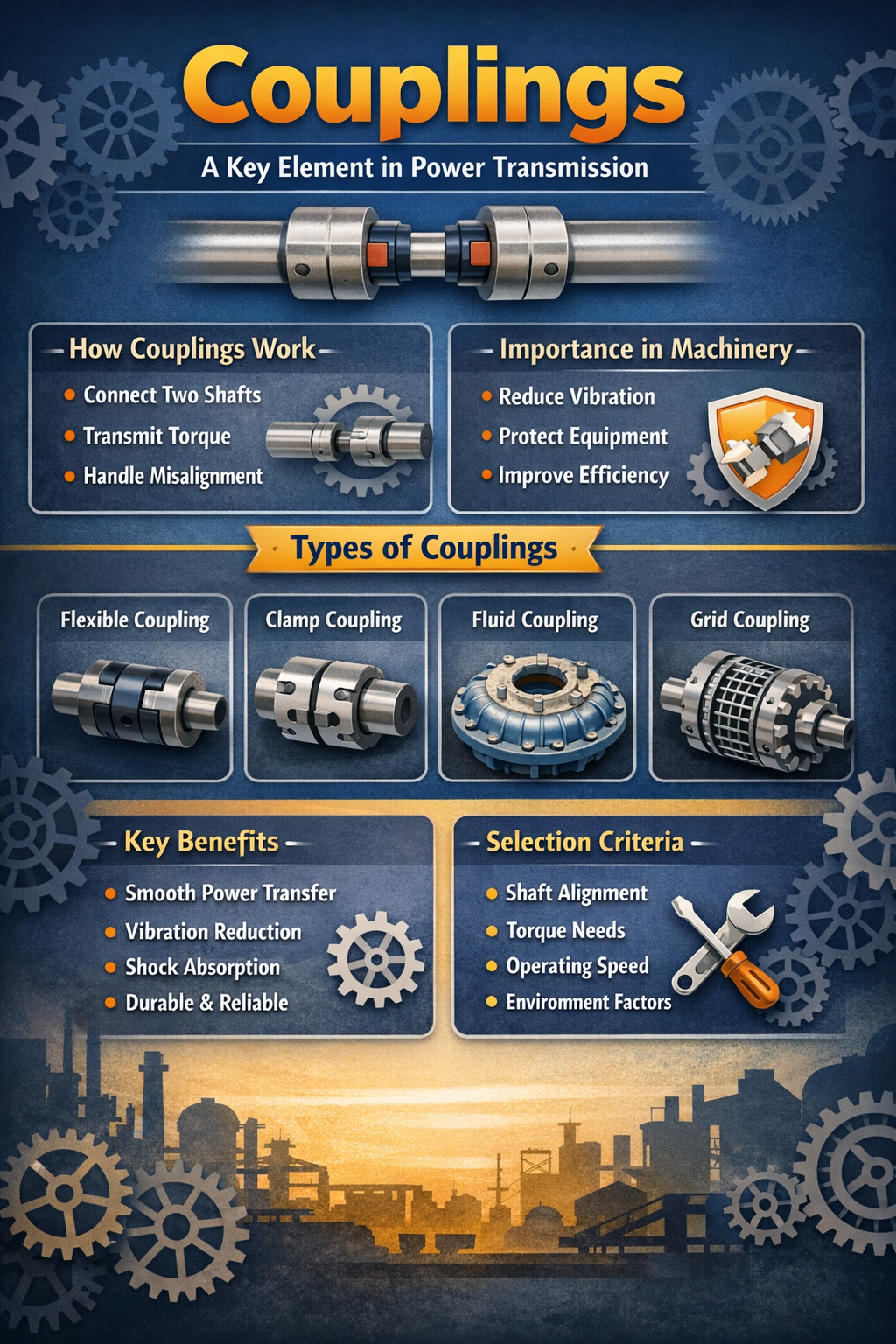
The primary function of a coupling is to join two shafts so that they can rotate together while transmitting torque. In real-world applications, it is difficult to maintain perfect alignment between shafts. Couplings help compensate for slight misalignments, including angular, parallel, and axial variations. This flexibility reduces stress on machine components and prevents premature wear and tear, improving the overall lifespan of the equipment.
There are different types of couplings available, each designed for specific applications and requirements. Rigid couplings, such as flange couplings, provide a strong and solid connection but require precise alignment. Flexible couplings, on the other hand, are designed to handle misalignment and absorb shocks. Examples of flexible couplings include elastomeric couplings, gear couplings, grid couplings, and jaw couplings. Each type offers unique benefits depending on the operational needs.
One of the major advantages of using couplings is their ability to absorb shock loads and reduce vibration. In industrial environments, machinery often experiences sudden changes in load or speed. Couplings act as a buffer, protecting the connected components from damage. This not only enhances machine performance but also reduces maintenance costs and downtime.
Another important benefit of couplings is their ease of installation and maintenance. Most couplings are designed to be simple and user-friendly, allowing quick assembly and disassembly. Some types, like elastomeric and jaw couplings, do not require lubrication, making them low-maintenance options. Regular inspection and proper alignment can further extend the life of the coupling and the machinery it connects.
Materials used in couplings vary depending on the application. Metal components such as steel or cast iron provide strength and durability, while flexible elements made of rubber or polyurethane offer elasticity and shock absorption. Selecting the right coupling material is essential for ensuring optimal performance under specific operating conditions, such as temperature, load, and environmental exposure.
Couplings are commonly used in equipment like pumps, compressors, conveyors, fans, mixers, and generators. Their ability to handle different operational challenges makes them indispensable in both light-duty and heavy-duty applications. Whether it is a small machine or a large industrial system, couplings ensure efficient and reliable power transmission.
In conclusion, couplings are vital components in modern mechanical systems, offering a balance of strength, flexibility, and protection. By connecting shafts efficiently and compensating for misalignment, they help improve machine performance and longevity. Choosing the right type of coupling based on application requirements can significantly enhance operational efficiency and reduce maintenance costs. For any industry relying on rotating machinery, couplings are an essential and dependable solution.


















Write a comment ...