
Couplings are vital mechanical components used to connect two rotating shafts for the purpose of transmitting power. They are widely used in industries such as manufacturing, automotive, energy, and heavy engineering. Though often small in size, couplings play a huge role in ensuring that machines operate smoothly, efficiently, and safely.
The basic function of a coupling is to transfer torque from a driving shaft to a driven shaft. However, their importance extends far beyond this simple task. In real-world conditions, shafts are rarely perfectly aligned due to installation errors, thermal expansion, or operational loads. This misalignment can lead to vibration, noise, and premature wear of machine components. Couplings help overcome these challenges by accommodating slight misalignments and reducing mechanical stress.
One of the key benefits of using couplings is their ability to absorb shocks and vibrations. In high-speed or heavy-load machinery, sudden changes in load can create stress on the system. Couplings act as a buffer, absorbing these shocks and protecting critical components such as motors, gearboxes, and bearings. This not only improves performance but also extends the life of the equipment.
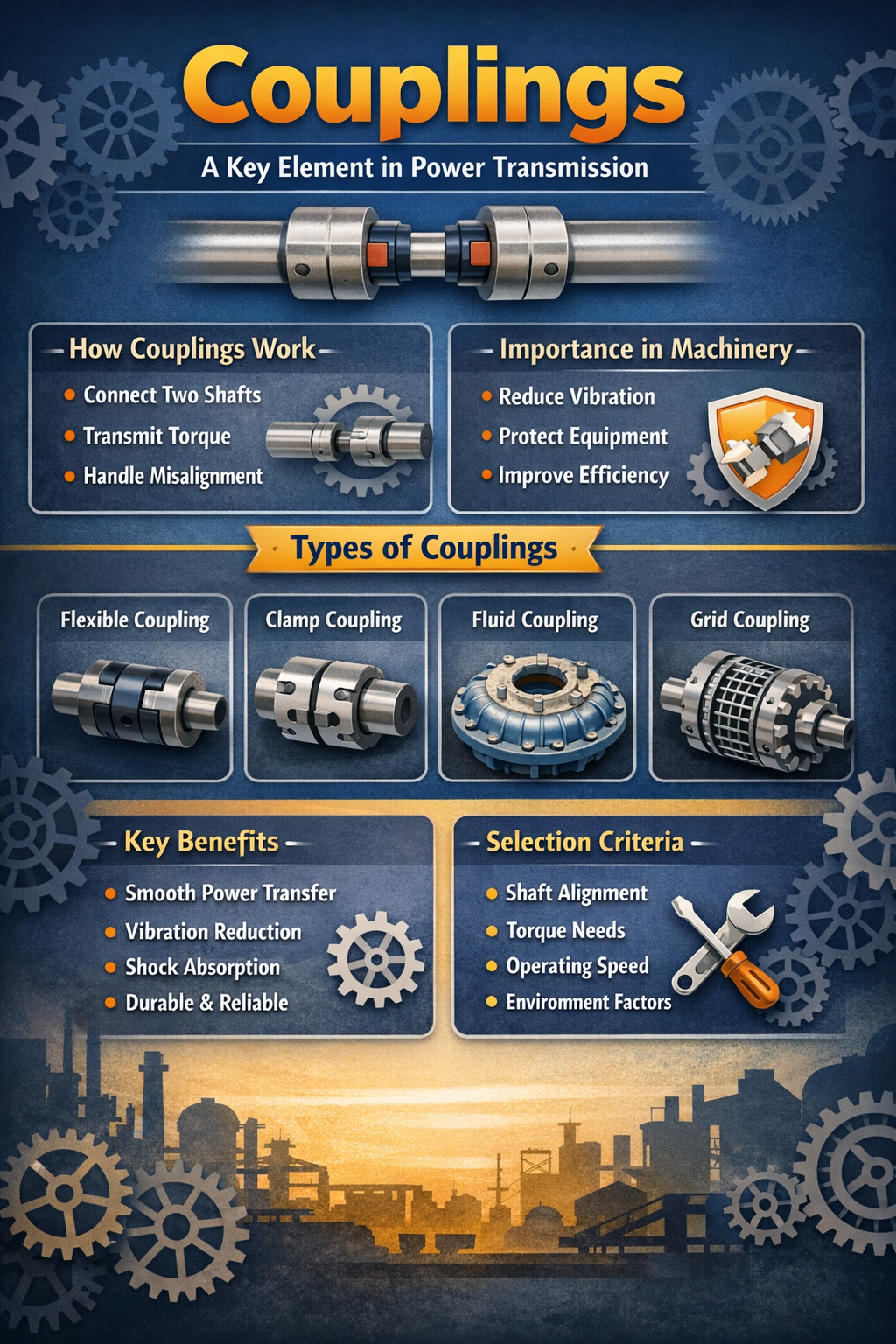
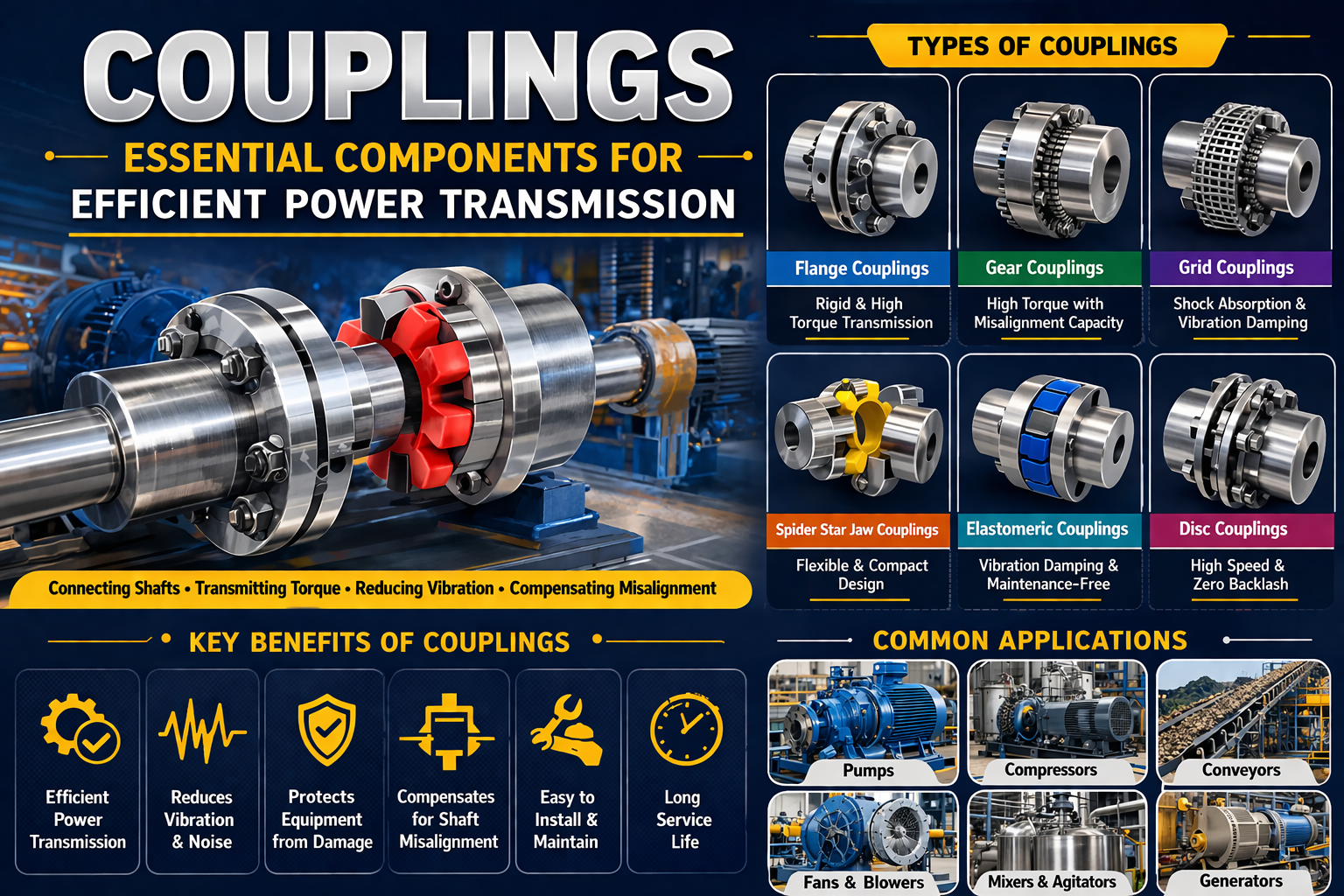
There are various types of couplings available, each designed for specific applications. Rigid couplings are used when precise alignment is required and no flexibility is needed. These couplings provide a strong and fixed connection between shafts but are not suitable for systems where misalignment occurs.
Flexible couplings are the most commonly used type in modern machinery. They are designed to handle different types of misalignment while reducing vibration and noise. These couplings are made from materials such as rubber, elastomers, or metal, depending on the application. Flexible couplings are ideal for pumps, compressors, and industrial machines.
Another important type is the grid coupling, which is known for its ability to handle high torque and absorb shock loads. It consists of a flexible grid element that connects two hubs, providing both strength and flexibility. Grid couplings are often used in heavy-duty applications such as mining and construction equipment.
Fluid couplings are also widely used in systems that require smooth and controlled power transmission. These couplings use hydraulic fluid to transfer torque, allowing gradual acceleration and reducing mechanical stress. They are commonly found in conveyor systems, cranes, and automotive applications.
Selecting the right coupling is essential for achieving optimal machine performance. Engineers must consider several factors, including torque requirements, speed, alignment conditions, environmental factors, and maintenance needs. Choosing the wrong coupling can lead to inefficiency, increased wear, and costly downtime.
Regular maintenance is crucial to ensure the proper functioning of couplings. Routine inspections can help identify issues such as misalignment, wear, or damage before they become serious problems. Proper lubrication, alignment checks, and timely replacement of worn components can significantly improve the lifespan of couplings and the machines they support.
In conclusion, couplings are indispensable components in mechanical systems that ensure efficient power transmission and enhance machine reliability. Their ability to accommodate misalignment, absorb shocks, and protect equipment makes them essential in various industries. By choosing the right coupling and maintaining it properly, businesses can improve productivity, reduce maintenance costs, and achieve long-term operational success.


















Write a comment ...