
Introduction
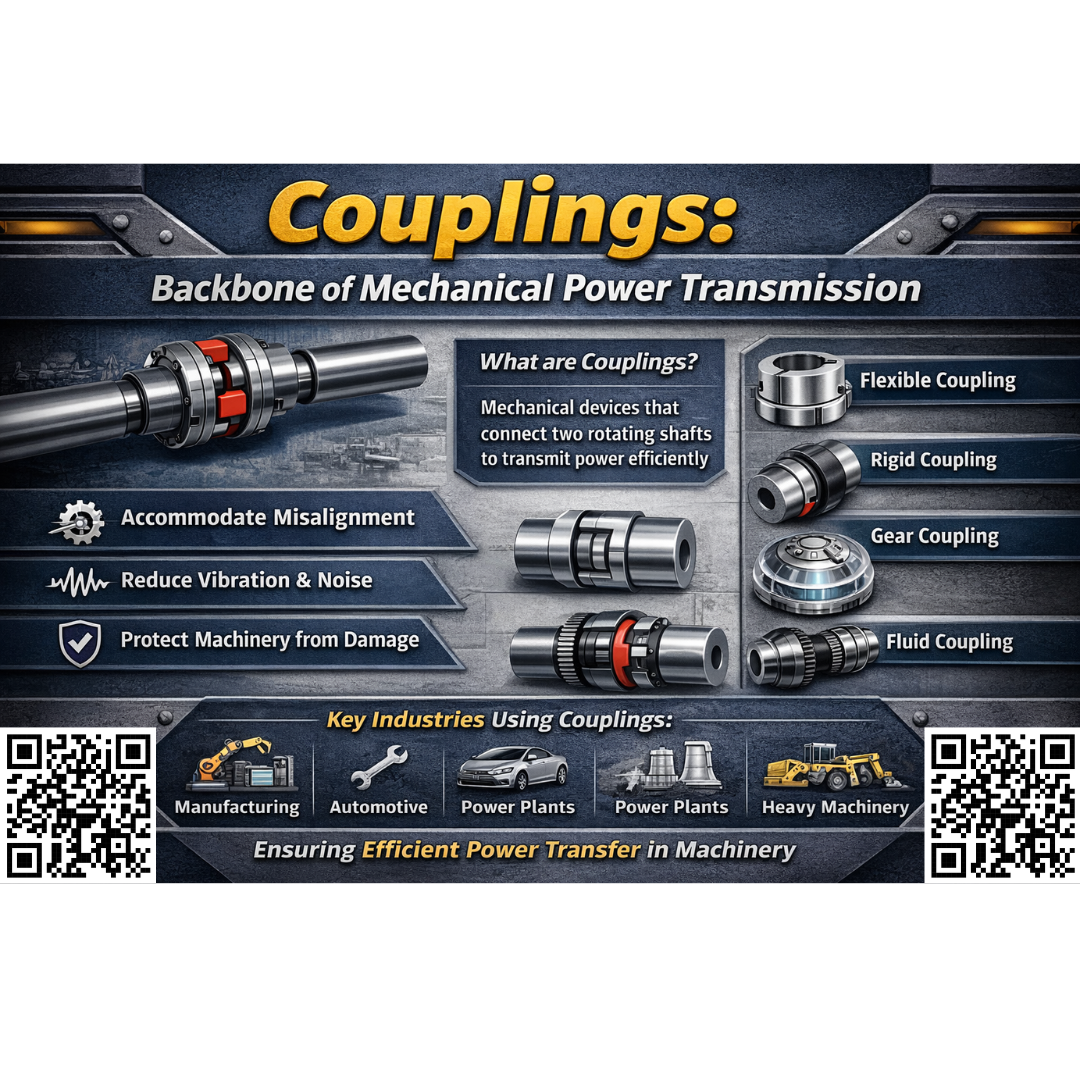
Couplings are one of the most important components used in mechanical systems to connect two shafts and transmit power. They are widely used in machines where rotational motion needs to be transferred efficiently from one part to another. From small equipment to large industrial machines, couplings play a vital role in ensuring smooth and reliable operation.
The main purpose of a coupling is not just to connect shafts, but also to handle misalignment, reduce vibration, and protect machinery from damage.
How Couplings Work
Couplings work by joining two rotating shafts together so that torque can be transmitted from the driving shaft to the driven shaft. Depending on the type of coupling, they may allow slight flexibility or maintain a rigid connection.
In real-life applications, shafts are rarely perfectly aligned due to installation errors or operational conditions. Couplings help manage this misalignment while ensuring that the machine continues to function efficiently.
Types of Couplings Used in Industries
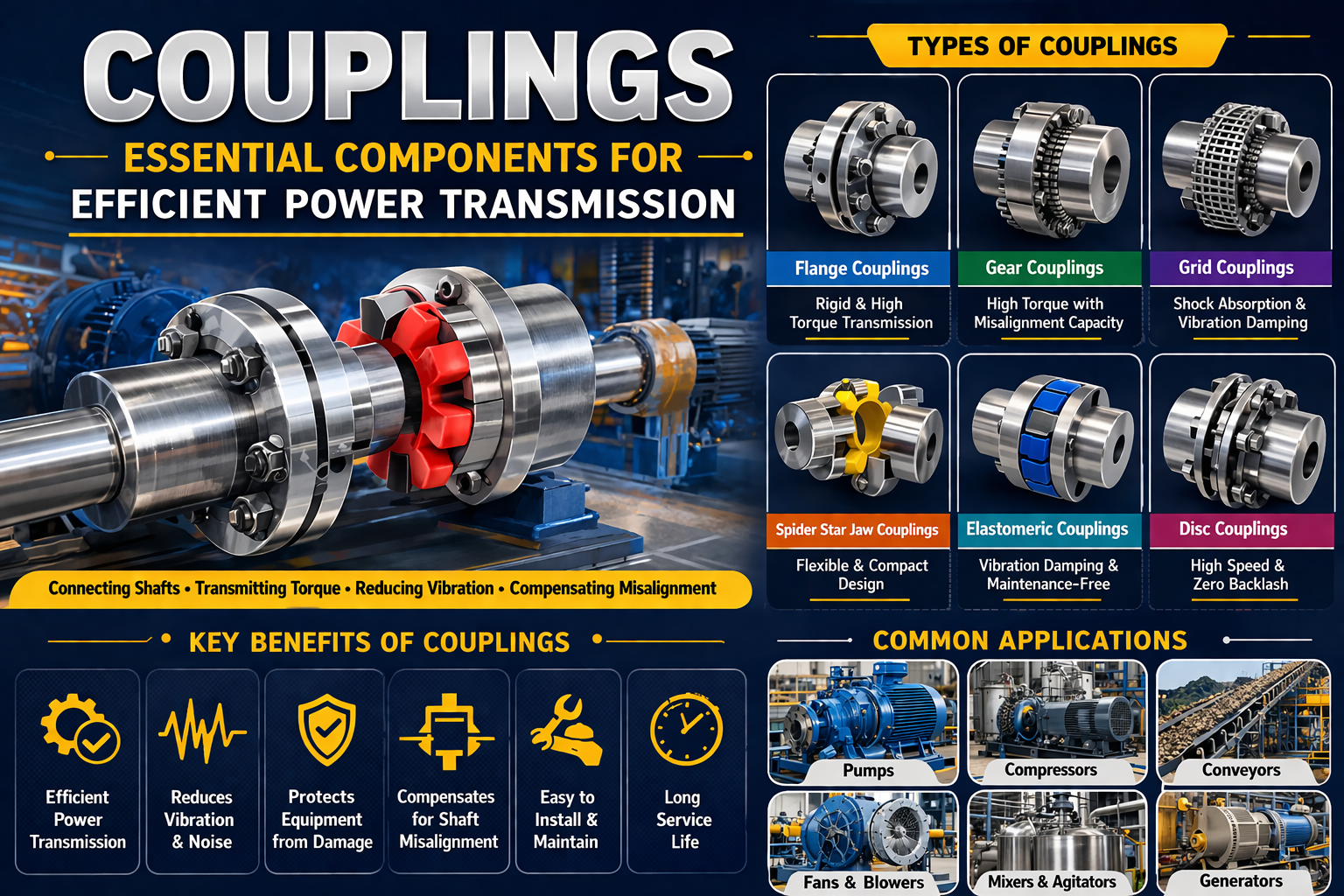
There are various types of couplings designed to meet different industrial requirements. Each type serves a specific purpose:
Sleeve or Muff Coupling
This is one of the simplest types of couplings. It consists of a hollow cylinder that connects two shafts. It is easy to use and cost-effective but requires proper alignment.
Clamp or Split Coupling
Clamp couplings are made in two halves and are bolted together. They are easy to assemble and disassemble, making them suitable for maintenance-friendly applications.
Flexible Couplings
Flexible couplings are the most commonly used in industries. They allow for slight misalignment and help in reducing vibration.
Examples include:
Jaw Coupling: Ideal for absorbing shocks
Oldham Coupling: Handles parallel misalignment
Tyre Coupling: Uses rubber for flexibility and vibration control
Fluid Couplings
Fluid couplings use oil or hydraulic fluid to transfer power. They provide smooth startup and reduce mechanical stress, especially in heavy machinery.
Grid Couplings
Grid couplings use a metallic grid to connect shafts. They are strong and capable of handling high torque while absorbing shocks effectively.
Importance of Couplings in Machinery
Couplings are critical for maintaining the performance and safety of machines. Without them, even minor misalignment could lead to serious damage.
They help in:
Maintaining alignment between shafts
Reducing mechanical stress
Improving operational efficiency
Protecting expensive equipment
Ensuring safety in industrial operations
Because of these advantages, couplings are used in almost every rotating machine.
Advantages of Couplings
Couplings offer several benefits that make them indispensable in engineering systems:
Smooth Power Transmission: Ensures consistent torque flow
Vibration Reduction: Enhances machine stability
Shock Absorption: Protects components from sudden impacts
Flexibility: Adapts to different operating conditions
Durability: Designed for long-term use
These features contribute to improved productivity and reduced downtime in industries.
Selection Criteria for Couplings
Choosing the right coupling is essential for system performance. Some key factors to consider include:
Type of application
Shaft size and alignment
Load and torque requirements
Operating speed
Environmental conditions
Proper selection ensures that the coupling performs efficiently and lasts longer.
Conclusion
Couplings are a fundamental part of mechanical systems, enabling efficient power transmission and protecting machinery from damage. With various types available, each designed for specific applications, they provide flexibility, durability, and reliability. Whether in industrial machines or everyday equipment, couplings continue to be a crucial element in modern engineering systems.


















Write a comment ...